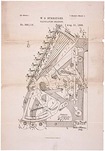
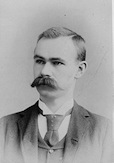
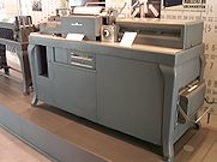
A Tabulating Machine.
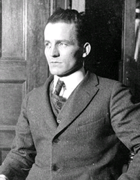
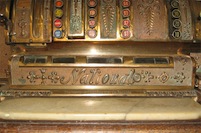
The late 19th and early 20th centuries were times of massive growth in population and production, accelerated by the First World War, in which these industrialists supplied both sides. So, people, offices, shops and factories needed all the electro-mechanical devices available to them. Cash Registers from NCR, (who trashed the competition), Adding Machines, Money Counting Machines, Time Recording Machines, and Tabulators were making the first High Tech boom. But these were not computers.
Kurzweil (see top) - stated his definition of a computer, as follows:
What is a computer?
“I would define a computer as a machine capable of automatically performing (that is, without human intervention) sequences of calculations, and of choosing between alternate sequences of calculations based on the results of earlier calculations.
The description of the sequence of calculations to be performed, which includes all alternate paths and the criteria for choosing among them, is called a program.
A programmable or general purpose computer is one in which we can change the program.
A special purpose computer is one in which the program is built-in and unchangeable.
A calculator is distinguished from a computer by its inability to perform more than one (or possibly a few) calculations for each human intervention and its inability to make decisions to choose from among multiple paths of computation.
With the advent of today's programmable calculators, the distinction between calculators and computers has become blurred.
Note that these definitions say nothing about the underlying technology, which, at least in theory, might be mechanical, electronic, optical, hydraulic, or even flesh and blood. Indeed, the era of practical computation began not with electronics but with mechanical and electromechanical automata.”
In other words, a computer has built-in logic. It can make decisions based upon changing data.
So how did this happen. How did we get from Babbage to Kurzweil to Woz, Gates, Jobs and Joy; Macs and Linux and that other stuff?
Well, the discovery that changed everything was the development of electricity. I wont dwell too much on this development but will provide a quick overview and some links if you want to learn more. Benjamin Franklin had his famous experiment in 1754 which almost killed him, He proved that electricity existed by flying a kite held by a wire in a thunderstorm. He also tried to capture electricity in what we now know as batteries. This was accomplished by Alessandro Volta (as in Volts) in Italy in 1800. But real electricity -- passing a current from a magnet through copper wires was discovered by Michael Faraday, an Englishman in the mid 19th century. His work was extended by James Watt (maybe), (What’s a Watt?), James Maxwell, Andre Ampere as in (Amps), and especially Nicola Tesla in the latter part of the century and was a source of inspiration to Albert Einstein at the beginning of the 20th. For other stories on the history of electricity, this is a good site.
In the early 20th century, Thomas Edison patented the electric lightbulb (and also the phonograph -- or record player). These inventions led to the electrification of the developed world. Throughout the early part of the 20th century, entire continents, cities, streets, houses and offices were all wired for electricity, and the use of gas power was over. Now we are reliant on electric power, no matter it’s cost or source.
(It’s interesting to note that Edison said to his friends, Henry Ford (cars and factories) and Harvey Firestone (Tires and Rubber products), “I'd put my money on the sun and solar energy. What a source of power! I hope we don’t have to wait until oil and coal run out before we tackle that”).
So in a space of three decades, from the 1890s to the 1920s, the World was transformed from gas and mechanical devices, to a world of electro-mechanical devices.
Finally on electricity, people have been studying the sun since Galileo’s time. Solar activity occurs in 11 year cycles, with sunspot -- and resulting solar flare activity ranging from little to hyperactive. The first recorded flare from the sun was observed by astronomers in 1859, as visible brightening of small areas within a sunspot. Solar flares are classified as A, B, C, M or X class according to their strength. Each class has a peak strength ten times greater than the preceding one. Within a class there is a linear scale from 1 to 9, so an X2 flare is twice as powerful as an X1 flare, and is four times more powerful than an M5 flare. The more powerful M and X class flares are often associated with a variety of effects on the near-Earth space environment. Do you see where I’m heading?
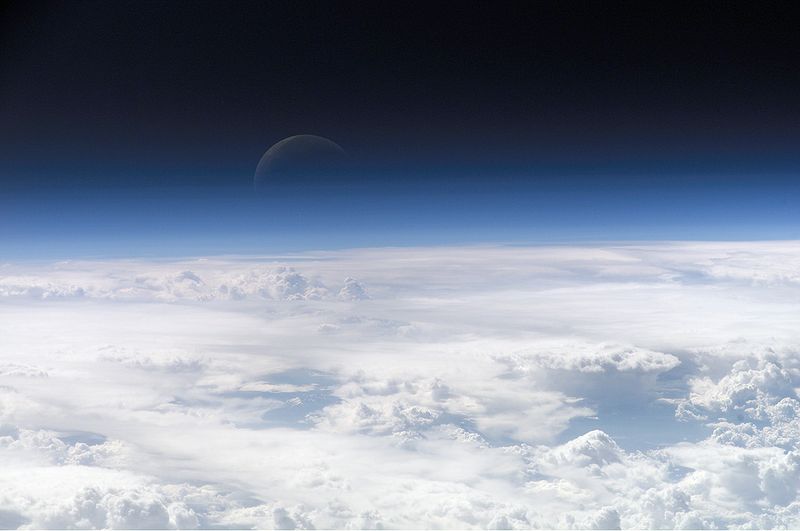
As I write this in early 2009, we are in the up-swing of a cycle that will peak in 2012. The last cycle produced some of the strongest solar storms on record. We are used to having X9-14 storms, the last cycle had some storms that reached X28 or higher. By some NASA counts, they reached X42. Fortunately, the brunt of that storm did not face Earth directly. The largest solar storm to hit Earth was that storm in 1859, and traces of solar debris can still be found today in Greenland.
The point is that if we were hit with the storm that hit us directly in 1859, well, you can read here. We have no backup if the power grid goes down. As the article noted, a recent medium sized CME knocked out power in Quebec for the better part of a day.
OK, let’s go on. The Depression.