By the 19th century most naturalists understood that species could change form over time, and that the history of the planet provided enough time for major changes. So, it was a natural question to ask, what is the Origin of Species? Perhaps it started with the question into specific species, but the results that are still being researched and discovered have opened our eyes to a completely different way of looking at the world. With today's still emerging understanding, it is in our interest, and I believe, our responsibility to be careful of the Other Life that co-exists with us here on Earth.
This is the story of how we came to know about Origins. It too, gets a bit technical in places, so look up words you do not understand, and have patience trying to put the story together.
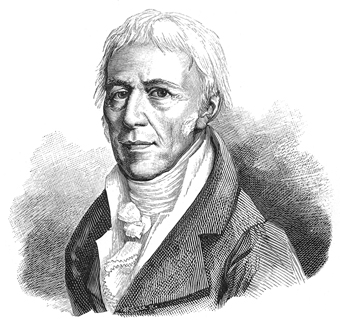
There is recent renewed interest in the inheritance of acquired characteristics that do not affect DNA sequences, but instead alter expression in an inheritable manner. Thus, neo-lamarckism, as it is sometimes termed, is not a challenge to the theory of evolution by natural selection.
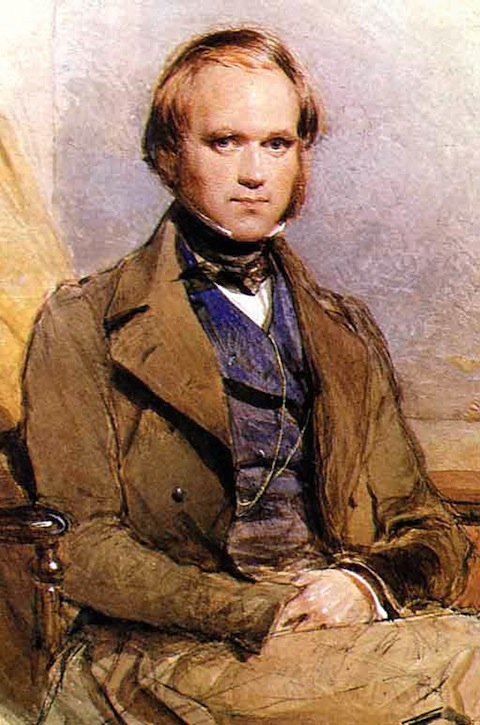
CHARLES DARWIN AT AGE 22
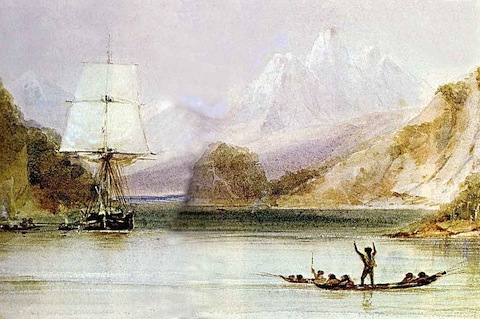
A watercolour by HMS Beagle's draughtsman, Conrad Martens. Painted during the survey of Tierra del Fuego, it depicts native Fuegians hailing the Beagle.
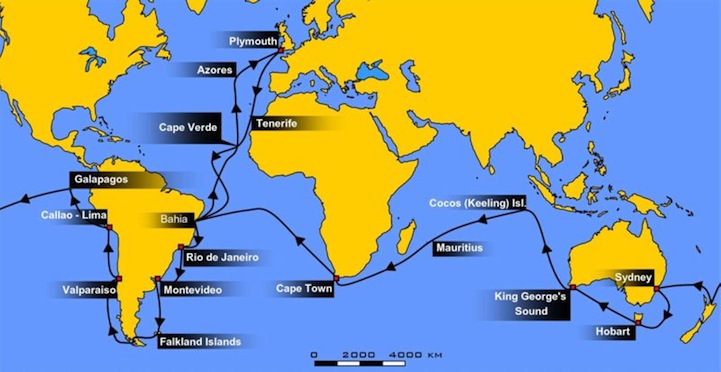
The Voyage of the Beagle
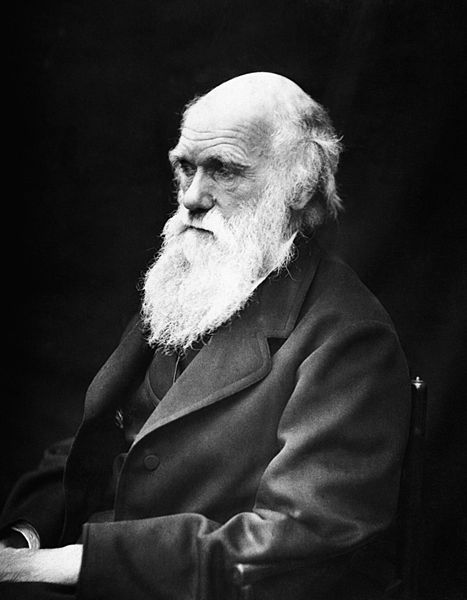
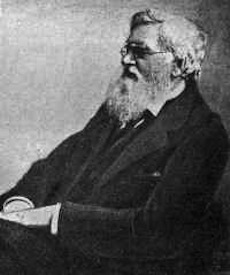
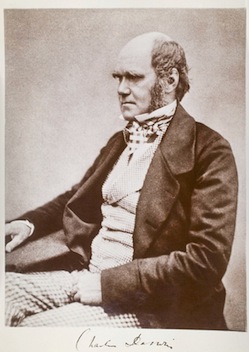
CHARLES DARWIN IN OLD AGE - PHOTOGRAPH BY JULIA MARGARET CAMERON.
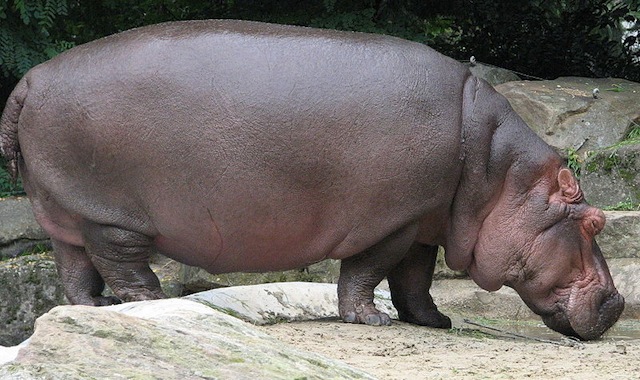
One evening, having a beer while sitting with a friend after work on the shore of Lake Tanganyika, on the border of Burundi and the Congo, two enormous hippopotami emerged from the lake. Looked at us and lay down. Maybe we were supposed to buy them a beer too.
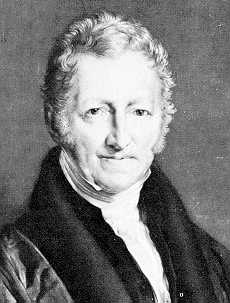
As a result, Darwin argued, not all the members of a population will be able to survive and reproduce (especially people stuck in traffic every morning and evening). Those that did will, on average, be the ones possessing variations—however slight—that make them slightly better adapted to the environment. If these variable traits are heritable, then the offspring of the survivors will also possess them. Thus, over many generations, adaptive variations will accumulate in the population, while counter-adaptive traits will tend to be eliminated.
It should be emphasized that whether a variation is adaptive or non-adaptive depends on the environment: different environments favor different traits. Since the environment effectively selects which organisms live to reproduce, it is the environment (the "fight for existence") that selects the traits to be passed on. This is the theory of evolution by natural selection. In this model, the length of a giraffe's neck would be explained by positing that proto-giraffes with longer necks would have had a significant reproductive advantage to those with shorter necks. Over many generations, the entire population would be a species of long-necked animals.
In 1859, when Darwin published his theory of natural selection, the mechanism behind the inheritance of individual traits was unknown. Although Darwin made some speculations on how traits are inherited (pangenesis), his theory relies only on the fact that inheritable traits exist, and are variable (which makes his accomplishment even more remarkable.)
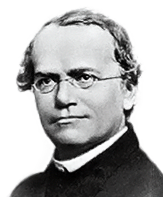
The theory of the evolution of species through natural selection has two important implications for discussions of species -- consequences that fundamentally challenge the assumptions behind Linnaeus' taxonomy. First, it suggests that species are not just similar, they may actually be related.
Some students of Darwin argue that all species are descended from a common ancestor.
Second, it supposes that "species" are not homogeneous, fixed, permanent things; members of a species are all different, and over time species change. This suggests that species do not have any clear boundaries but are rather momentary statistical effects of constantly changing gene-frequencies. One may still use Linnaeus' taxonomy system to identify individual plants and animals, but one can no longer think of species as independent and immutable.
The rise of a new species from a parental line is called speciation. There is no clear line demarcating the ancestral species from the descendant species.
Although the current scientific understanding of species suggests that there is no rigorous and comprehensive way to distinguish between different species in all cases, biologists continue to seek concrete ways to operationalize the idea. One of the most popular biological definitions of species is in terms of reproductive isolation; if two creatures cannot reproduce to produce fertile offspring, then they are in different species. This definition captures a number of intuitive species boundaries, but it remains imperfect. It has nothing to say about species that reproduce asexually, for example, and it is very difficult to apply to extinct species. Moreover, boundaries between species are often fuzzy: there are examples where members of one population can produce fertile offspring with a second population, and members of the second population can produce fertile offspring with members of a third population, but members of the first and third population cannot produces fertile offspring. Consequently, some people reject this definition of a species.
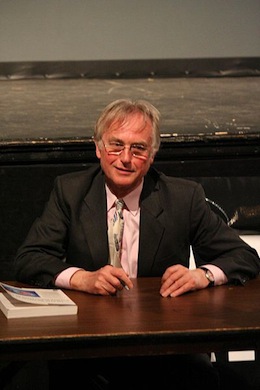
The classification of species has been profoundly affected by technological advances that have allowed researchers to determine relatedness based on molecular markers, starting with the comparatively crude blood plasma precipitation assays in the mid-20th century to Charles Sibley's ground-breaking DNA-DNA hybridization studies in the 1970s leading to DNA sequencing techniques. The results of these techniques caused revolutionary changes in the higher taxonomic categories (such as phyla and classes), resulting in the reordering of many branches of the phylogenetic tree (see also: molecular phylogeny).
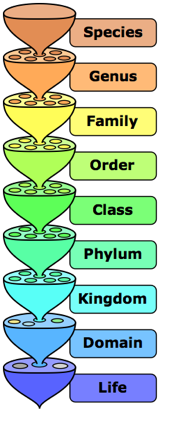
TAXONOMIC CATEGORIES
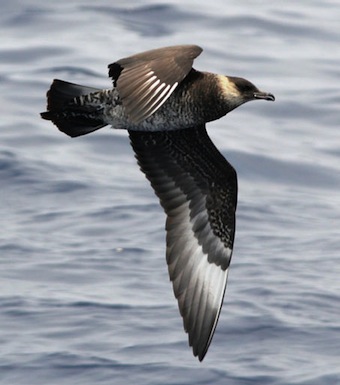
For taxonomic categories below genera, the results have been mixed so far; the pace of evolutionary change on the molecular level is rather slow, yielding clear differences only after considerable periods of reproductive separation. DNA-DNA hybridization results have led to misleading conclusions, the Pomarine Skua - Great Skua phenomenon being a famous example.
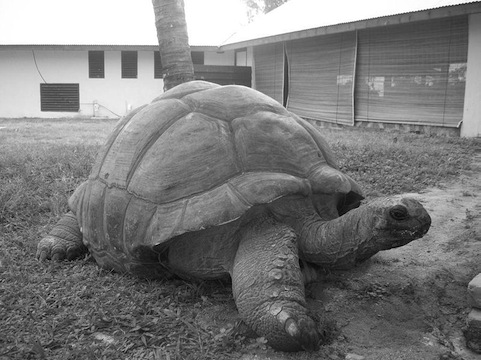
Turtles have been determined to evolve with just one-eighth of the speed of other reptiles on the molecular level, and the rate of molecular evolution in albatrosses is half of what is found in the rather closely related storm-petrels. As a result, turtles live far longer, albeit slower lives than other species. Esmerelda, in the photo above, is thought to be the oldest living Giant Tortoise at 170 years old, since the death of Harriet at 176, a Galapagos giant tortoise. Esmeralda is an Aldabra Giant Tortoise.
The Aldabra tortoise is recently becoming more available in the pet trade. The price still makes them somewhat of an exclusive animal, costing between $1,000 and $20,500 depending on its size. Care for these tortoises requires a good deal of commitment. They are very powerful as adults, and can be destructive in a typical suburban setting; capable of ramming through fences and doors. Fairly expensive accommodations are necessary to contain these tortoises and keep them at a comfortable temperature throughout the year (80-95 F).
The story of a 130-year-old Aldabra giant tortoise and a baby hippopotamus who became friends in a wildlife sanctuary in Kenya has been featured in the Owen and Mzee series of children's books and web site since 2006.
The hybridization technique is now obsolete and is replaced by more reliable computational approaches for sequence comparison. Molecular taxonomy is not directly based on the evolutionary processes, but rather on the overall change brought upon by these processes. The processes that lead to the generation and maintenance of variation such as mutation, crossover and selection are not uniform (see also molecular clock). DNA is only extremely rarely a direct target of natural selection rather than changes in the DNA sequence enduring over generations being a result of the latter; for example, silent transition-transversion combinations would alter the melting point of the DNA sequence, but not the sequence of the encoded proteins and thus are a possible example where, for example in microorganisms, a mutation confers a change in fitness all by itself.
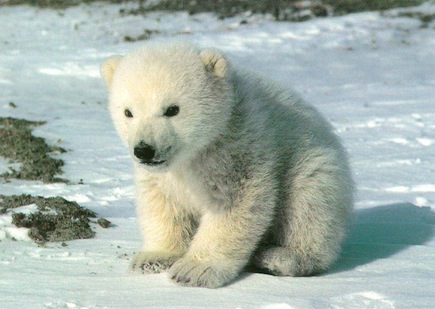
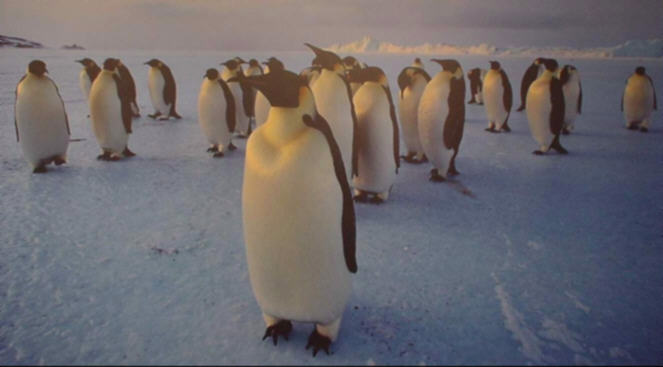
So, an overview of how we have come far in the last 200 years about other life on Earth. We now care enough to worry about extinction of endangered species. We worry about the Polar Bear, and the Penguin among many others. So kids, get involved and perhaps help save "Other Lives".
Darwinian Footnote: As a humorous celebration of evolution, the annual Darwin Awards are bestowed on individuals who “improve our gene pool by removing themselves from it."