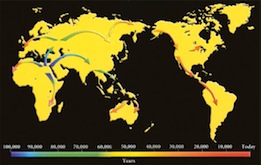
 Scientists now believe that modern humans emerged from Africa 100-160,000 years ago. Around 50,000 years ago these humans began to disperse from Africa reaching all the habitable continents. Since all people of the world, including the most isolated tribal groups, have a form of music, scientists conclude that music must have been present in the ancestral population prior to the dispersal of humans around the world. Consequently music must have been in existence for at least 50,000 years and the first music must have been invented in Africa and then evolved to become a fundamental constituent of human life.
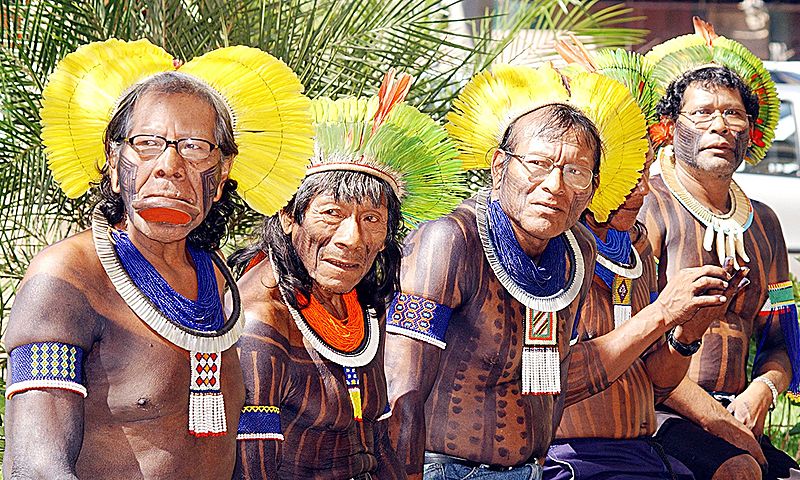
If you travel to the African bush, the Australian outback places where indigenous people have lived for a long time, you will hear music that dates from past millennia. Ancient rhythms that really -- if you are open -- touch something primitive inside you.

I happen to believe that a number of what we think of today as being religious ceremonies, are the formalization of pre-religious rituals. I believe this is especially true of holidays that coincide (roughly) with the four solstices, with the moon phases and other natural phenomena.
The prehistoric era is considered to have ended with the development of writing.
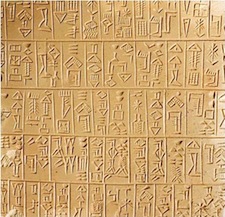
Ancient writings (such as in Aristotle: Problems, Book XIX.12") described musical techniques of the time. These included double pipes, and ancient bagpipes, as well as stringed instruments. Reviews of ancient drawings on vases and walls, etc., show an extensive use of pipes in what we would know as double flutes. These likely served as a drone or "keynotes," while other instruments were used played to play melodic passages.

Indian classical music (marga) can be found from the scriptures of the Hindu tradition, the Vedas. Samaveda, one of the four vedas describes music at length. The history of musical development in Iran [Persia] Persian music, dates back to the prehistoric era. The great legendary king, Jamshid, is credited with the invention of music. Music in Iran can be traced back to the days of the Elamite Empire (2,500-644 B.C). Fragmentary documents from various periods of the country's history establish that the ancient Persians possessed an elaborate musical culture. The Sassanian period (A.D. 226-651), in particular, has left us ample evidence pointing to the existence of a lively musical life in Persia. The names of some important musicians such as Barbod, Nakissa and Ramtin, and titles of some of their works have survived.
The term Early music era may also refer to contemporary but traditional or folk music, including Asian music, Persian music, music of India, Jewish music, Greek music, Roman music, the music of Mesopotamia, the music of Egypt, and Muslim music.